Introduction
Many small businesses face a common problem: late customer payments. This creates cash flow issues and makes it difficult to run daily operations. To solve this problem, the government introduced the MSME 45-day payment rule to protect small businesses and ensure they receive payment on time.
The law provides business owners with security and encourages their growth, helping build a more stable and confident business environment.
What is the MSME Payment Time Limit?
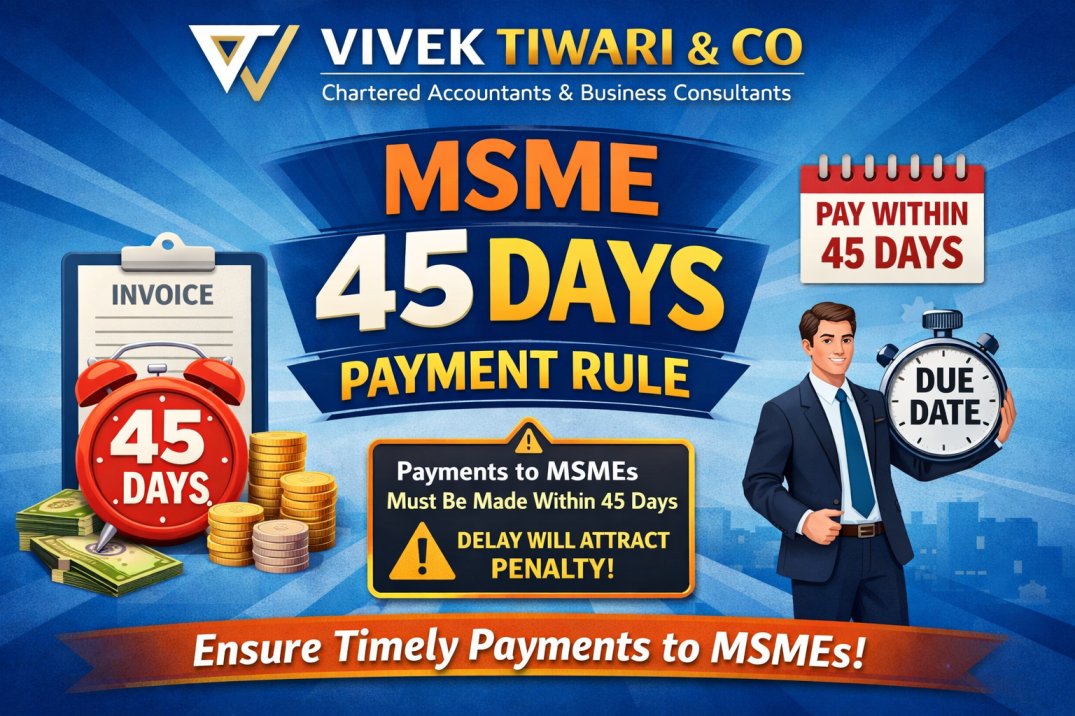
The MSME 45-day payment rule states that when a registered small business sells goods or provides services, the buyer must pay within 45 days.
This rule was created to prevent buyers from delaying payments for long periods.
In simple words:
- A small business provides a product or service
- The buyer must pay within a fixed time.
- Delay beyond the limit can result in a penalty.
This system supports small businesses and improves their financial stability.
Applicability of This Payment Rule
Understanding when and how the MSME 45-day payment rule applies is crucial for business owners to ensure compliance and protect their cash flow.
This rule applies when:
- The supplier is registered under MSME
- Goods or services are supplied.
- The buyer can be a company, a firm, or an individual.
- The transaction is business-related
If the business is not registered, this protection may not apply.
Payment Time Limit Explained
There are two situations:
When a Written Agreement Exists
- Payment must follow the agreement terms.
- The maximum allowed time is 45 days.
When No Agreement Exists
- Payment must be made within 15 days.
Even if both parties agree, payment cannot cross the legal limit defined under the MSME 45-day protection.
This law offers several advantages, including improved cash flow, legal protection, and support for business growth. It becomes even more useful when businesses understand their MSME classification, as the category determines eligibility, compliance, and payment protection benefits. This law gives many advantages to small business owners.
Major benefits:
- Improves cash flow
- Reduces financial pressure
- Provides legal protection
- Helps business growth
- Improves payment discipline
- Reduces risk of loss
Because of the 45-day payment protection, buyers take payments more seriously.
What Happens if Payment is Delayed?
If the buyer does not pay within the allowed time:
- The buyer must pay interest
- The interest rate is higher than normal.
- The supplier can take legal action.
- A complaint can be filed online.
This legal protection shields business owners from potential losses, giving you peace of mind and confidence in your transactions.
Important Points to Remember
Every business owner should know these points:
- MSME registration is necessary.
- Always create a proper invoice.
- Mention payment terms clearly.
- Keep transaction records safe.
- Take action if payment is delayed.
These steps help protect your business.
How This Law Helps MSMEs Grow
This payment protection system helps businesses by:
- Giving financial security
- Improving confidence
- Supporting smooth operations
- Reducing dependency on credit
It creates a safe business environment.
Conclusion
The MSME 45-day payment rule is a powerful protection for small businesses. It ensures timely payment and reduces financial problems caused by delays.
Business owners should register their business and use this law to secure their payments. Professional firms like Vivek Tiwari & Co also help businesses understand these rules and complete the registration process properly. This support helps in long-term growth and financial stability.
FAQs Section
1. What is the MSME payment time limit?
It is the maximum time a buyer gets to pay a registered small business. This period cannot exceed 45 days.Buyers are legally required to adhere to the 45-day payment limit; failure to do so can result in penalties and legal action. Yes, buyers must follow the legal payment limit. Delay can result in an interest penalty.
3. What happens if the buyer does not pay?
The supplier can claim interest and file a complaint for recovery.
4. Who can use this protection?
Only businesses registered under MSME can use this benefit.
5. Is MSME registration compulsory?
Yes, registration is required to get payment protection benefits.